
Leon County Humane Society’s Pet Food Pantry
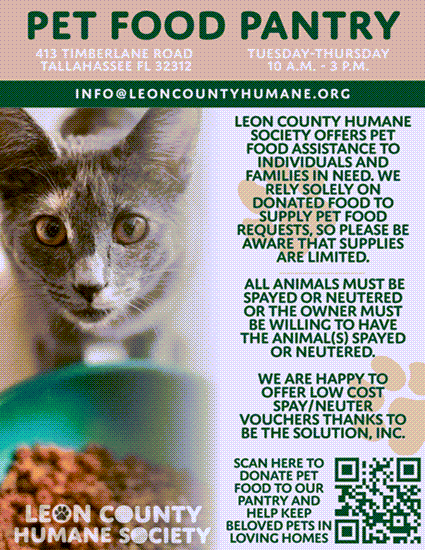
Leon County Humane Society (LCHS) is Tallahassee, Florida’s largest life-saving, non-profit animal welfare organization, dedicated to matching families with homeless pets, advocating for animals in need, and educating the community about responsible pet ownership. Through its Pet Food Pantry, LCHS provides free pet food and supplies to individuals and families in need.Pet Food Pantry program.
The Pantry relies solely on donated food to fulfill food requests. Supplies are limited, so LCHS tracks carefully to ensure resources are distributed equitably. Applicants must meet some requirements to qualify for the Pantry, including proof that pets have been spayed or neutered.
Cumbersome application and tracking process
To receive food from the Pantry, individuals must complete an application and show proof of income qualifications, rabies vaccination, and spay/neuter status for each of up to four pets. The application was originally a Google Doc, intended to be printed, filled out, and brought to LCHS, where a staff member would verify that the necessary requirements were met. All information was entered into an Excel spreadsheet and manually updated each time a request was processed.
In addition to the regular challenges with keeping paper records and using spreadsheets for tracking — for example, inconsistencies in data entry, or trying to determine if an applicant had previously been rejected — this approach created a headache when it came time to report on how resources were being allocated over time.
Streamlining the workflow
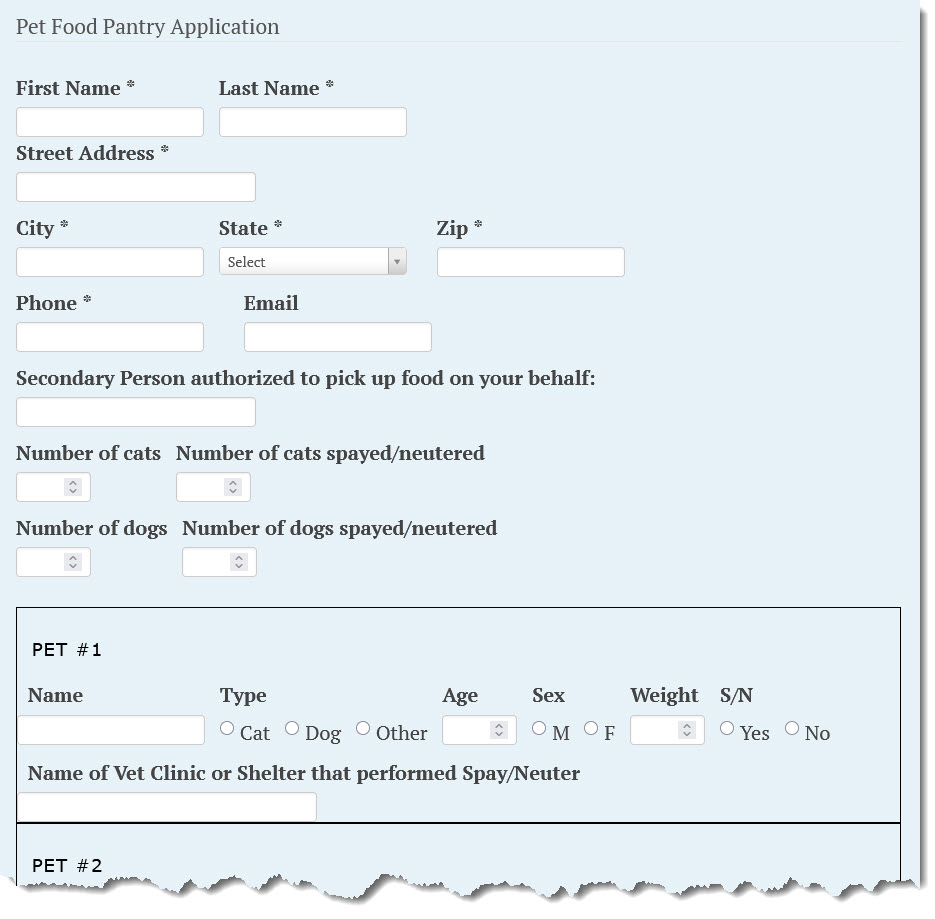
Although the Google Doc included checkbox fields for the applicant to attest that they met the requirements, proof still had to be shown to LCHS staff at their offices. We built the application using a CiviCRM Form Builder Submission Form, leaving these fields off the front-facing application and including them in an “Admin Only” version of the same form. Pet owners can now apply online and then visit the office with their documentation, where staff can call up their record to complete the application process.

To access an in-progress application, LCHS staff members use a table built in SearchKit to view all applications/clients. The report includes a link to sign up a new applicant.
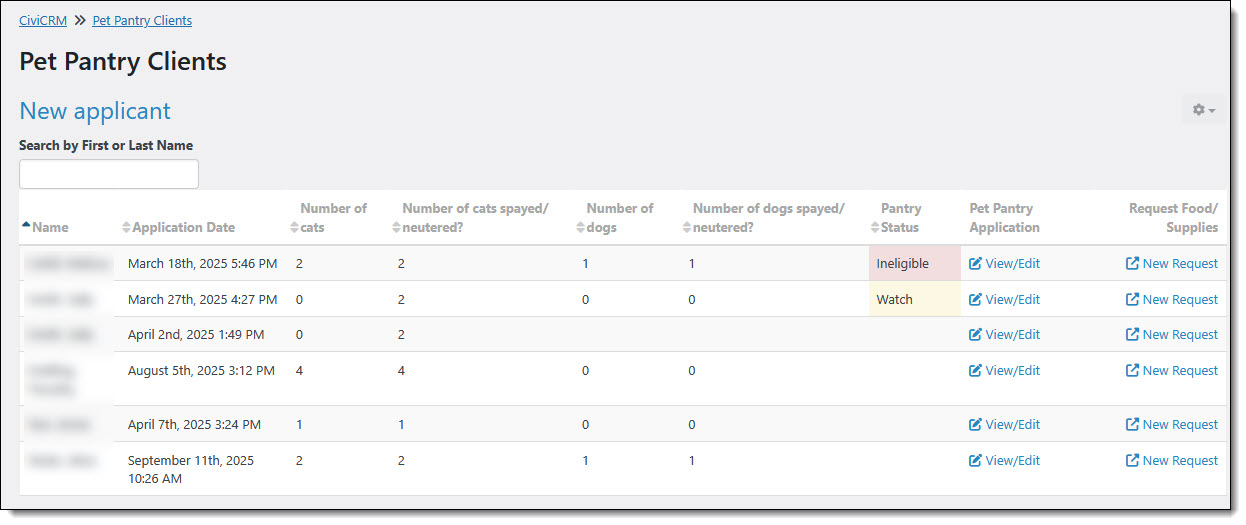
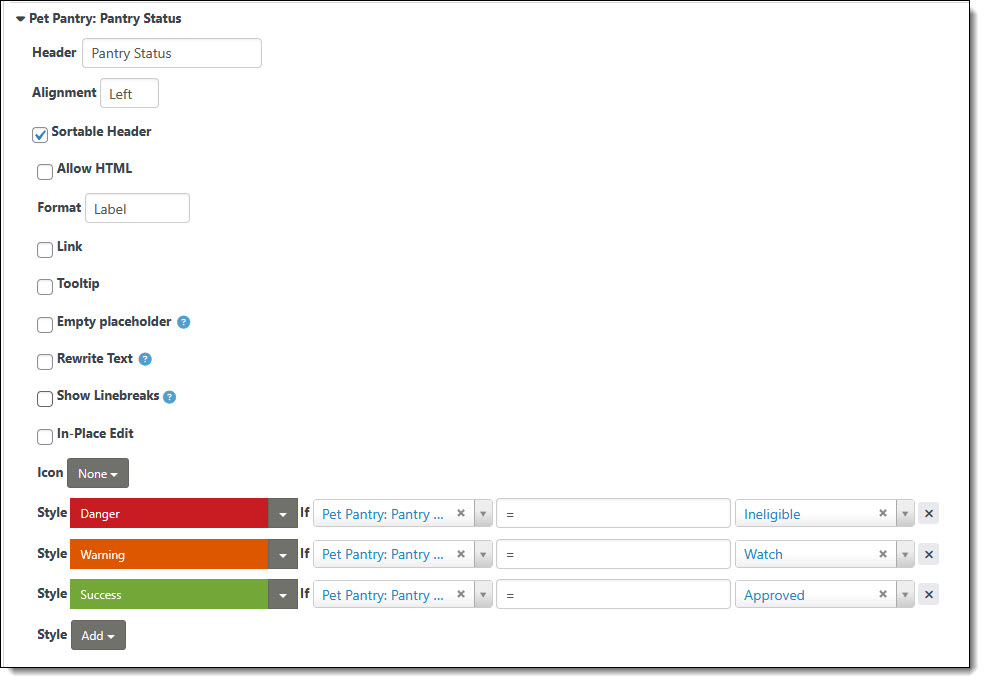
There is a column that shows the application status, color-coded so that staff can see at a glance if an applicant has been flagged or is ineligible to make further requests for food. The conditional color-coding is defined in the SearchKit Display for the Pantry Status column.
Logging and tracking requests for food assistance
Staff members can log new requests directly from the Pet Pantry Clients screen. The last column of the table includes a link to another FormBuilder submission form where data is collected and stored in a custom Activity Type, “Pet Pantry Request.”
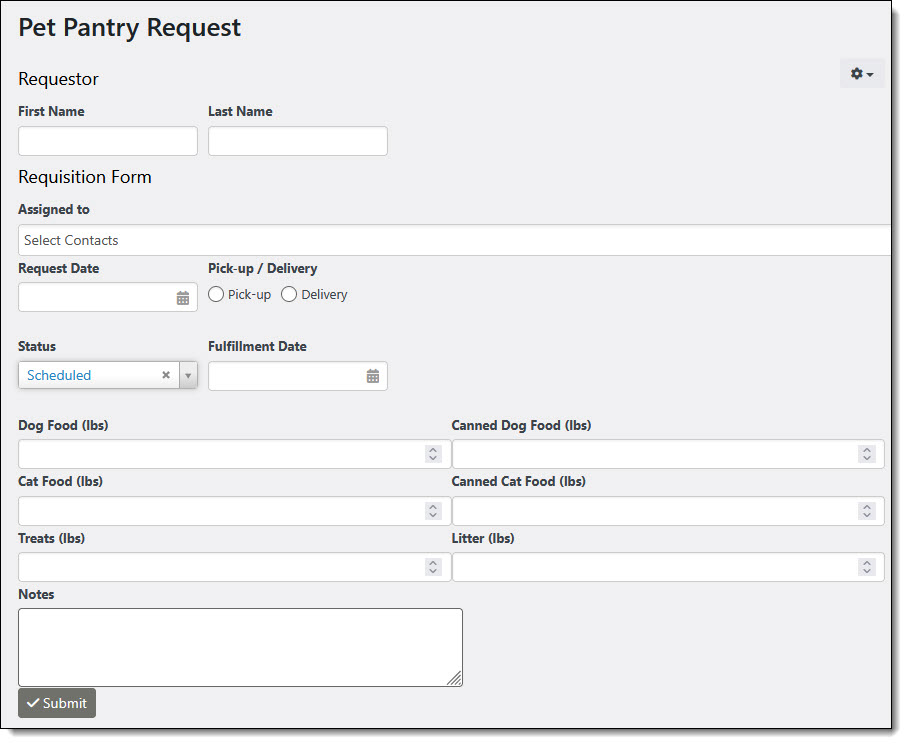
The Pet Pantry Request form shows the client’s Name, the Activity Date and Status, and a few custom data fields for recording the amount and type of food and supplies being requested. Most clients pick up food from LCHS at the time of the request, but in cases where pick up is scheduled for a future date, or where delivery is warranted, that can be indicated, and the Status set to “Scheduled,” until the Fulfillment Date when it can be marked “Completed.”
From the Activities tab of the Contact Summary screen, staff can view all requests made by the client and drill into the details of each. The original application details can also be viewed and/or edited in a dedicated Pet Pantry tab.

Improved data integrity, easier access
With CiviCRM, application data is now uniformly stored and easier to access via the Pet Pantry Report or from an individual’s Contact Summary screen. It’s now easier to collate information around owners and pets. LCHS can now report on basic demographic data, the number of dogs and cats served, and the amount of food and supplies distributed by the program each year without spending hours manually gathering and conforming data from spreadsheets.